

Victoria1 left her home with one pair of clothes for herself and her children. She didn’t know if they would ever be safe again. “Every step away from the past felt heavy and uncertain,” she says.
Leaving wasn’t simple. Her eldest daughter, Helene,1 lives with non-verbal autism and severe meltdowns. Every part of their escape had to account for that.
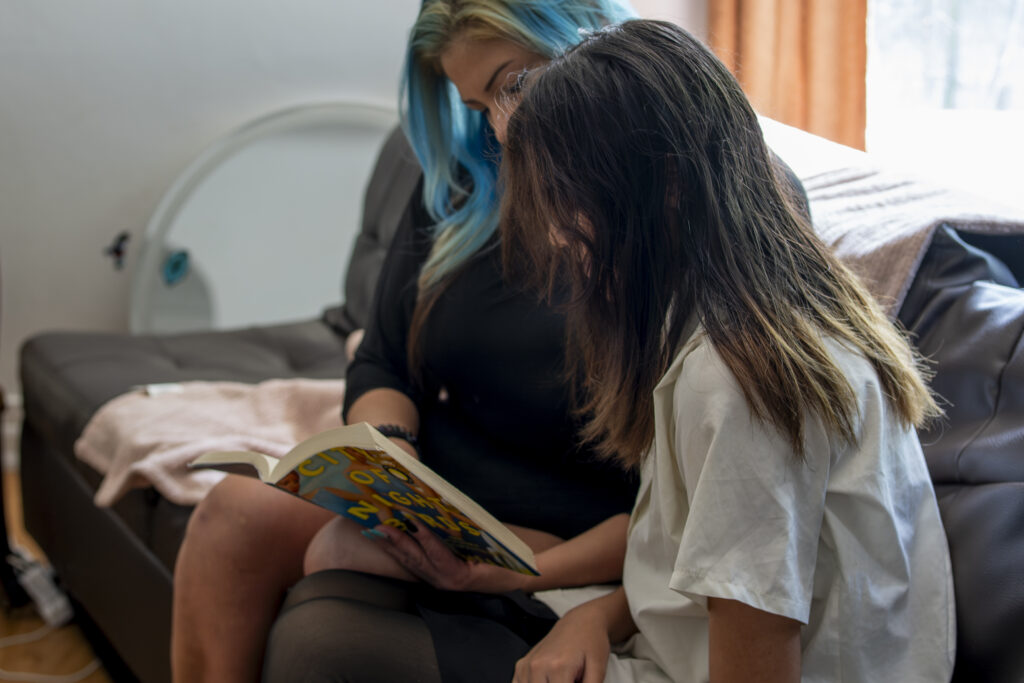
When WIN House called with an opening, it was the first sign of hope Victoria had had in a long time. “They welcomed us with open arms, just like family,” she says. The shelter became a place where her children could finally breathe. Her youngest, Beatrice1, remembers it simply: “I liked playing with the other kids. Making friends made me happy again.”
It’s a pattern WIN House’s team sees repeatedly. One mother recently told staff that her child, looking back on their time at the shelter, remembers it fondly rather than as something traumatic. For a child who lived through so much upheaval, that kind of memory says something about the shelter.
What WIN House offers goes well beyond a bed for the night. Counselling. Nursing. Transportation. Resource support. Respite care. Justice navigation. Recreational passes. Even small gestures, like a welcome basket or a gift card, tell a family who has lost almost everything that they still matter.
“They made me feel seen,” Victoria says.
Today, she’s focused on finishing her courses and building a future for her family, one she couldn’t have planned for a year ago.

For more than 57 years, WIN House’s doors have stayed open thanks to people who believe no one should have to make Victoria’s decision alone.
Every hour in Alberta, someone experiences violence at the hands of an intimate partner2. Walking through WIN House’s doors is, for many women, the hardest and bravest decision they will ever make.
Government funding covers the foundation of their emergency work — the shelter itself, crisis support workers. But the wraparound care that helped Victoria’s family heal — the counselling, the nursing, the sensory rooms, the trauma-informed family support worker, and the pet-safe program — depends on other sources of support.
That’s where gifts in Wills do their work. These kind of donations provide long-term financial stability. They allow WIN House to react to changing community needs, maintain essential services, and plan for the future.
For example, WIN House removed its old 21-day limit on emergency shelter stays and piloted a “Safe & Sustainable Exit” program. During the one-year pilot project, not one person who came to WIN House has circled back to them, a result the organization credits directly to having enough resources to let families heal at their own pace.
A gift in your Will gives the organization the flexibility to launch more pilot projects like this.
It also means that years from now, someone escaping abuse will still find a place where they are met with compassion instead of fear; hope instead of uncertainty.
Leaving is also the most dangerous time. The decision to walk out the door is the bravest one many women will ever make. Statistically, it’s also the moment risk peaks. That’s part of why the shelter’s work doesn’t end at intake. It’s why the wraparound care matters as much as the house itself.
Sadly, violence can sadly escalate. One woman lost her sister to intimate partner violence shared something with the team that has stayed with them: that violence doesn’t end when you lose someone, it continues on to reshape an entire family for generations, touching people who were never part of the relationship. It’s a reality WIN House sees in the survivors and family members who return, years later, to share their story of what the organization has meant to them.
Victoria’s advice to anyone considering a legacy gift is simple. “I’d tell people to donate because WIN House honestly saves lives,” she says. “When we arrived, we had nothing. Their support gave us everything.”
Learn more about leaving a gift in your Will to WIN House.
How does a gift in my Will support WIN House specifically?
WIN House: Legacy gifts fund the wraparound care that ensure a safe and sustainable exit — counselling, nursing, sensory rooms, trauma-informed family support, and programs like WIN House’s pet-safe partnership. They provide the runway we need to make sure families have time and resources to heal, not just a place to sleep. Learn more about what we do: Our Programs | WIN House
How do I leave a gift to any charity in my Will?
Will Power: You don’t need a complicated estate plan. Most people simply leave a small percentage in their Will, while keeping the rest for family and friends. It happens when you create or update your Will. Explore how to leave a gift to charity in your Will in three simple steps.
Q: Will leaving a gift to charity mean less for my family?
Will Power: A gift in your Will doesn’t compete with what you plan to leave for your family. Most people who leave a gift in their Will aren’t redirecting a large share of their estate to charity. They’re carving off a modest slice and letting the rest go exactly where it was always going to – their kids, their spouse, or whoever matters most to them. You can see how this works with our legacy calculator.
[1] Name has been changed to protect the privacy and safety of the individual.
[2] Wells, L., Boodt, C., & Emery, H. (2012). Preventing Domestic Violence in Alberta: A Cost Savings Perspective, The School of Public Policy, University of Calgary.
Topic: Charity Impact Stories